Sunsetting the Keep Calm-o-Matic

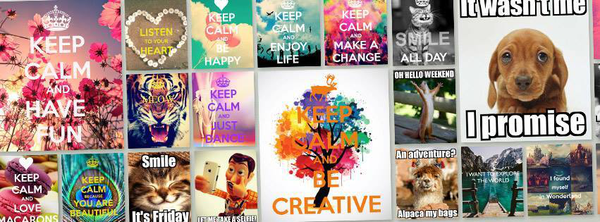
Do you remember the Keep Calm-o-Matic? Odds are if you were a British teenager in the early 2010s you would either have been on the site or known someone who was.
The story of how we built one of the world’s largest social content sites is an unusual one. Back in 2009, I was spending way too much time on social media sites looking at memes ranging from classics such as All Your Base right through to the then brand new phenomenon that was Lolcats. I noticed that there was a huge surge in interest in a classic British World War 2 poster that simply said “Keep Calm and Carry On”. Although the poster was never distributed during the war, and afterwards all copies were believed to have been destroyed, a copy survived and was discovered by a Northumbrian bookshop in 2000. Interest in the slogan grew and by the late 2000s a number of variations had cropped up, most notably a poster which changed the wording to “Now Panic and Freak Out” and turned the famous crown motif upside down.
I realised that it would be simple to create a site that would let people type in their own slogan, choose from a range of colours and fonts, and add their own logos or background images. A couple of weekend’s worth of frantic coding later and the Keep Calm-o-Matic was born.
Almost immediately the site was a huge success. It capitalised on the latent demand for social content creation which was emerging in the late 2000s, as epitomised by sites such as Wattpad, which at that time was rapidly becoming the home for creative writing. Internet technology was also improving, with the mass adoption of technologies such as broadband allowing for a richer and more immersive experience on websites, rather than the plain text sites of old. Users soon demonstrated their creative skills, with early favourite slogans emerging such as “We’re all Doomed” under a skull and crossbones, or the more quintessentially British “Keep Calm and Have a Cup of Tea”. However things really took off in 2011 after the American comedy humour online forum Something Awful discovered the site. Within a year one million posters had been created, and a further million were created just three months after that. Product and merchandising options were soon added, allowing site users to have their newly created poster images printed onto items such as mugs, t-shirts, mouse-mats and similar.
At its peak, the Keep Calm-o-Matic was in the top 0.001% of websites in the world, and was one of the highest visited websites in the UK outside of the big players such as Facebook, Google and YouTube. Keep Calm was at the forefront of a wave of new content generation sites, with site like Canva (valued at $40bn) launching at this time in late 2013, and Path.
Sadly, all things change. Running such a huge site takes a lot of time and effort, and at the same time, the team at Reincubate had built and launched iPhone Backup Extractor, the world’s first data recovery software for Apple devices, and the entire team was dedicated to supporting that product line. More recently the team came up with Camo, a tool that gives you video superpowers to make you look excellent on video calls and provide top-quality content creation tools to streamers and other content professionals.
Thus we come to 2023, and we think it’s now the right time to retire the Keep Calm-o-Matic. For 14 years it’s delighted hundreds of millions of users, who have created tens of millions of posters on the site covering topics as diverse as One Direction, Covid-19 and JoJo Siwa.
To everyone who played a part in the community, and to all of its customers: thank you. We couldn’t have done it without you.
